

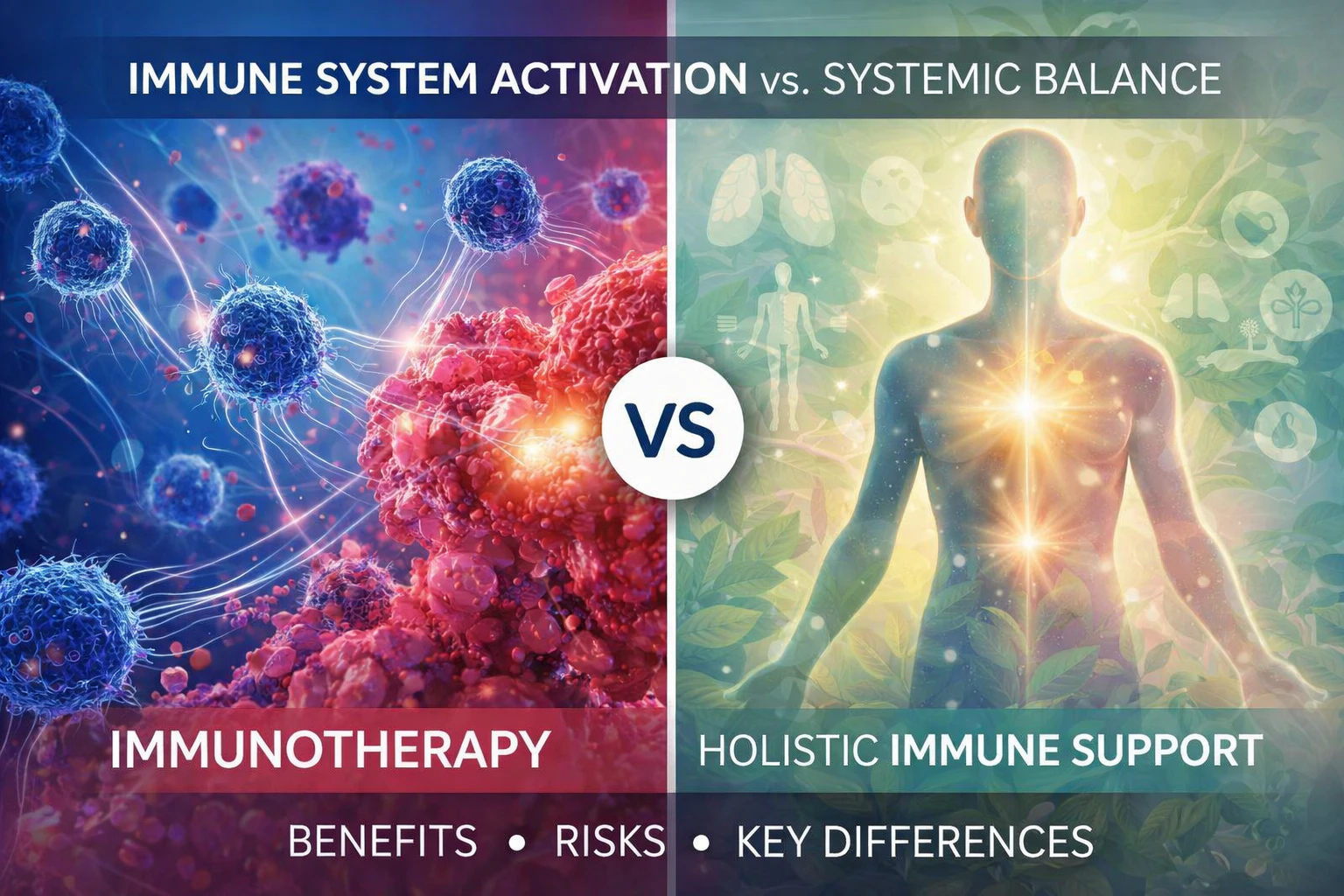
The immune system plays a central role in how the body identifies and responds to abnormal cells, including cancer. In modern oncology, this has led to the development of immunotherapy, a class of treatments designed to enhance or redirect immune activity against tumors.
At the same time, holistic and integrative approaches focus on supporting overall immune function and systemic balance through nutritional, metabolic, and mind–body strategies. While both approaches involve the immune system, their mechanisms, goals, and clinical applications differ significantly.
What Is Conventional Immunotherapy?
In traditional oncology, immunotherapy refers to treatments that actively modify or stimulate specific components of the immune system to recognize and attack cancer cells.
Common forms include:
- Checkpoint inhibitors
- Monoclonal antibodies
- CAR T-cell therapy
These therapies are highly targeted and often tailored to specific cancer types.
Primary Objective
The goal is to amplify or redirect immune activity so immune cells—particularly T cells—can identify and destroy cancer cells more effectively.
Potential Risks and Limitations of Immunotherapy
While immunotherapy represents a major advancement, it is not without risk. Because these therapies intentionally activate the immune system, they can sometimes trigger unintended consequences.
Key concerns include:
- Immune-Related Adverse Effects:
The immune system may begin attacking healthy tissues, leading to inflammation in organs such as the lungs, liver, intestines, skin, and endocrine glands. - Systemic Immune Dysregulation:
Overactivation can result in widespread inflammatory responses, which in some cases may become severe. - Unpredictable Response:
Not all patients respond to immunotherapy, and outcomes can vary significantly depending on tumor biology and individual immune function. - Delayed or Cumulative Effects:
Some adverse reactions may develop weeks or months after treatment begins, requiring careful monitoring.
Thus, while immunotherapy is more targeted than chemotherapy, it remains a potent biological intervention with complex systemic effects.
What Is Holistic Immune Support?
Holistic approaches take a broader perspective, focusing on optimizing the body’s overall immune environment rather than targeting a single pathway.
These strategies may include:
- Nutritional optimization
- Intravenous nutrient therapies
- Gut and microbiome support
- Stress reduction and mind–body practices
- Detoxification and metabolic support
Primary Objective
The goal is to restore balance and strengthen the immune system as a whole, allowing it to function more effectively within its natural regulatory framework.
Key Differences in Approach
1. Targeted vs. Systemic Focus
- Immunotherapy: Targets specific immune pathways or tumor markers
- Holistic Support: Enhances overall immune resilience and regulation
2. Mechanism of Action
- Immunotherapy: Directly alters immune signaling
- Holistic Approaches: Support underlying biological systems influencing immunity
3. Intensity and Risk Profile
- Immunotherapy: Can produce strong immune activation with potential for unintended inflammatory or autoimmune effects
- Holistic Support: Focuses on gradual modulation and stabilization of immune function
4. Personalization
- Immunotherapy: Based on tumor genetics and biomarkers
- Holistic Care: Based on the individual’s overall physiology, lifestyle, and metabolic condition
5. Role in Care
- Immunotherapy: Primary or adjunctive cancer treatment
- Holistic Support: Complementary, focused on supporting the body during and after treatment
Areas of Potential Overlap
Although distinct, these approaches are not mutually exclusive. Both recognize the immune system as central to cancer response.
Holistic strategies may be used to:
- Support overall health during immunotherapy
- Help maintain energy and nutritional status
- Promote recovery and systemic balance
This reflects a broader model in which targeted intervention and systemic support serve different but complementary roles.
A Broader Perspective on Immune Function
Immune function is influenced by multiple factors, including:
- Nutrition
- Sleep and circadian rhythm
- Stress and emotional health
- Microbiome balance
- Environmental exposures
Holistic care emphasizes addressing these foundational elements to create conditions that support long-term immune stability.
Final Perspective
Immunotherapy and holistic immune support represent two fundamentally different philosophies in cancer care. Immunotherapy seeks to activate and direct the immune system, while holistic approaches aim to restore balance and optimize its function.
Understanding both the potential benefits and the risks of immune activation allows for a more informed and individualized approach—one that considers not only how to target disease, but how to support the body as a whole.
If you are evaluating your options in cancer care and want a more comprehensive, whole-body approach, our team is here to help you navigate your choices with clarity and confidence.
At Utopia Wellness and Cancer Center, we design personalized integrative programs that support immune balance, overall health, and treatment resilience.
Schedule your complimentary consultation today to explore how a tailored, holistic strategy can support your care journey.