


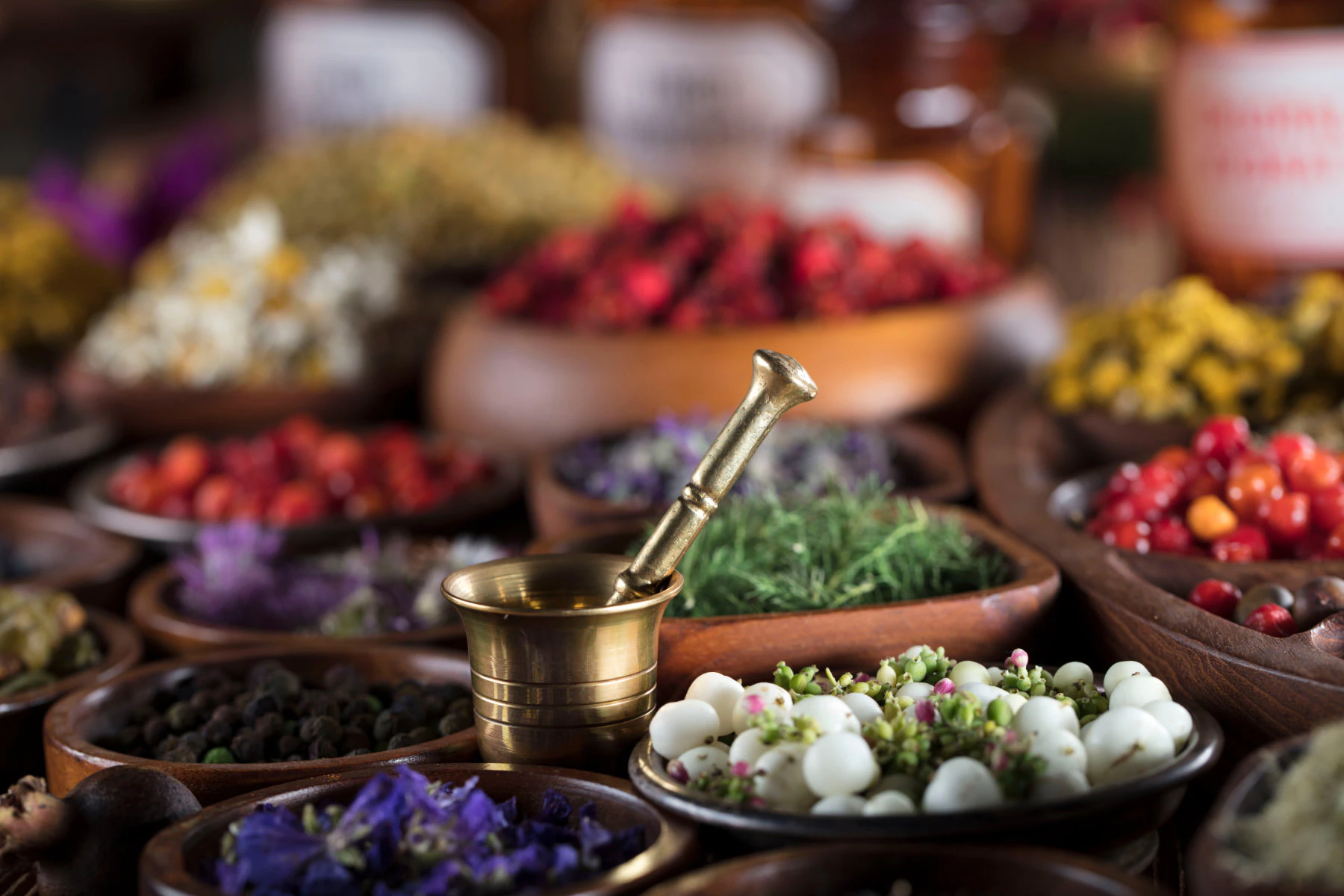
What Is Herbal Medicine?
Herbal medicine (also called herbalism or botanical medicine) is the use of plants and plant extracts to support health.
It includes:
- Whole herbs (leaves, roots, flowers, seeds)
- Herbal extracts and tinctures
- Teas and powders
- Topical preparations (oils, salves)
Herbal medicine has been practiced for thousands of years across many cultures and continues to be studied for its biological effects.
How Herbal Medicine Works
Plants contain naturally occurring compounds that may influence physiological processes.
Herbs are studied for their potential to:
- Support immune system function
- Help regulate inflammation
- Provide antioxidant activity
- Support digestion and metabolism
- Promote overall balance in the body
These effects vary depending on the specific herb and individual response.
Herbal Medicine in Integrative Cancer Care
In integrative oncology, herbal medicine is used as a complementary approach, not a primary cancer treatment.
It may be included to help:
- Support general well-being
- Maintain nutritional and metabolic balance
- Reduce inflammation
- Support the body during periods of stress
At Utopia Cancer Center, herbal therapies are integrated into individualized care plans.
Common Forms of Herbal Medicine
Herbal therapies can be delivered in different forms depending on the individual’s needs:
- Teas (infusions and decoctions)
- Capsules and tablets
- Liquid extracts (tinctures)
- Powders
- Topical applications (oils, creams, salves)
Each form offers different absorption and convenience options.
Why Personalization Matters
Herbal medicine is most effective when tailored to the individual.
Factors considered include:
- Health history
- Current symptoms
- Medications and potential interactions
- Lifestyle and goals
At Utopia Cancer Center, herbal plans are developed as part of a broader, personalized strategy.
Potential Benefits of Herbal Medicine
When used appropriately, herbal medicine may support:
- Immune system balance
- Reduction of inflammation
- Digestive health
- Energy and vitality
- Overall well-being
Results vary based on the individual and the specific herbs used.
Safety and Considerations
Herbal medicine is generally well tolerated, but it is not risk-free.
Important considerations:
- Herbs can interact with medications
- Quality and sourcing matter
- Dosage must be appropriate
- Not all herbs are suitable for every individual
Professional guidance helps ensure safe and appropriate use.
How Herbal Medicine Fits Into a Whole-Body Approach
At Utopia Cancer Center, herbal medicine is combined with:
- Nutritional counseling
- IV nutrient therapy
- Whole body detoxification
- Mind–body medicine
- Lifestyle interventions
This integrated model supports the body across multiple systems.
Frequently Asked Questions
Can herbal medicine treat cancer?
Herbal medicine is not a treatment for cancer. It is used as a supportive therapy in integrative care.
Are herbs safe to take with medications?
Some herbs may interact with medications. It is important to use them under guidance.
How long does it take to see results?
Responses vary. Some effects may be noticed within weeks, while others take longer.
Do I need a personalized herbal plan?
Yes. Individualization helps ensure safety and effectiveness.
Is herbal medicine evidence-based?
Many herbs are studied for their biological effects, though research varies by compound.
Why Patients Choose Utopia Cancer Center
Patients choose Utopia Cancer Center for:
- Personalized, integrative care
- Evidence-informed herbal strategies
- Whole-person approach
- Physician-directed treatment plans
Take the Next Step
If you are interested in herbal medicine and want to understand how it may support your health, the next step is a personalized consultation.
Schedule your complimentary consultation to:
- Review your health history
- Identify appropriate herbal strategies
- Build a customized integrative plan
📞 (727) 799-9060
🌐 utopiacancercenter.com
Natural support. Personalized care. A stronger foundation for health.