

Schedule Your Complimentary Consultation
📞 (727) 799-9060
🌐 utopiacancercenter.com
What Is High-Dose IV Vitamin C?
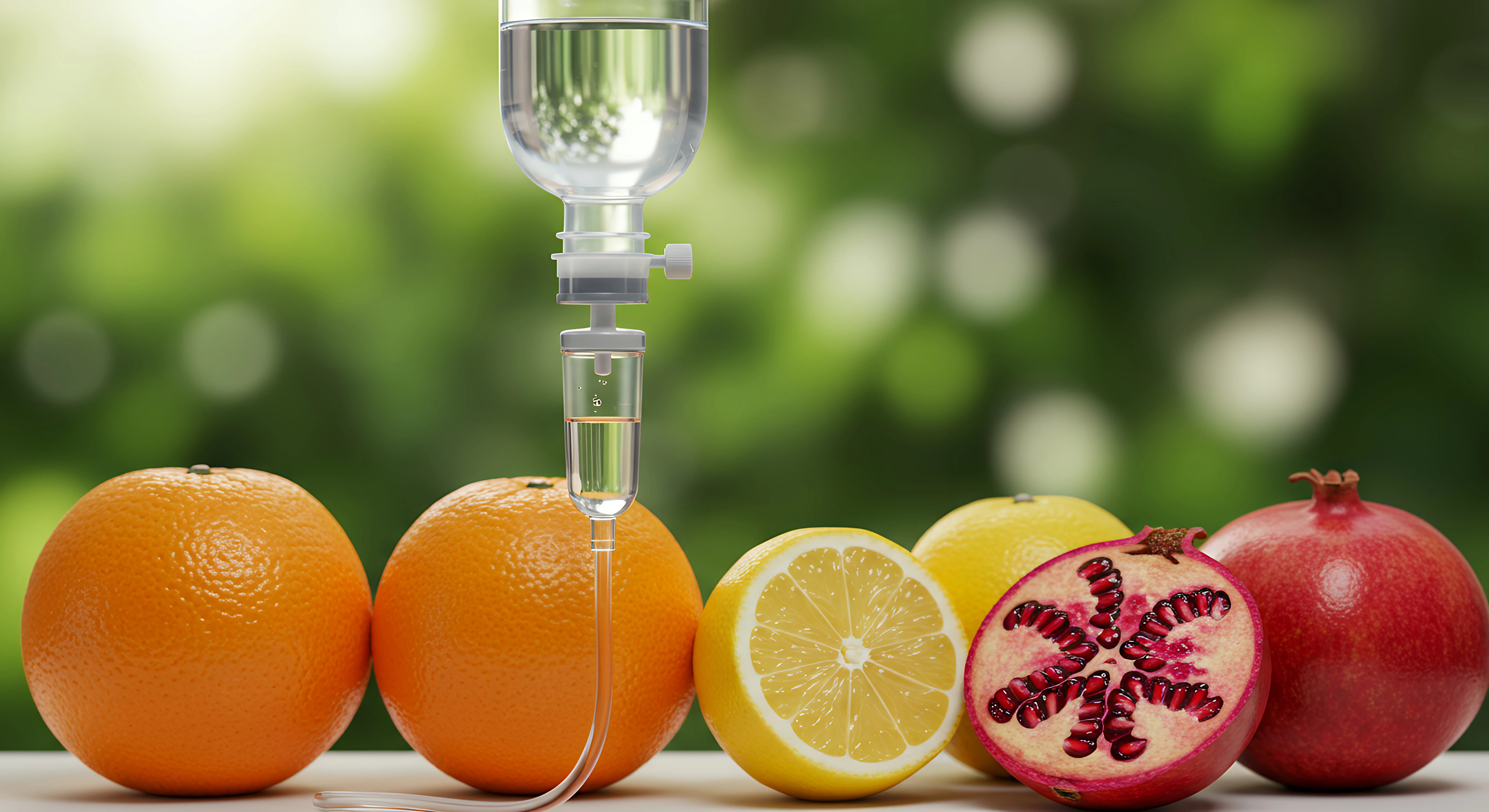
High-dose intravenous (IV) vitamin C is a medical therapy that delivers vitamin C directly into the bloodstream at concentrations far beyond what can be achieved through oral supplementation.
At these levels, vitamin C functions differently than a standard nutrient. In addition to its antioxidant role, it may act as a pro-oxidant in certain biological environments—generating hydrogen peroxide in extracellular spaces, a mechanism currently being studied in relation to abnormal cell activity.
Why IV Vitamin C Instead of Oral Supplements?
Oral vitamin C is limited by intestinal absorption and cannot achieve therapeutic blood concentrations.
IV Vitamin C:
- Delivers 100% directly into circulation
- Achieves pharmacologic concentrations
- Bypasses digestive limitations
- Allows higher systemic availability
Oral Vitamin C:
- Limited absorption at higher doses
- Lower blood concentration levels
- Often associated with gastrointestinal discomfort at high intake
This distinction is essential when evaluating therapeutic applications.
How High-Dose IV Vitamin C May Support the Body
At clinical doses, IV vitamin C is being studied for several biological effects relevant to integrative oncology:
- Immune Support: Enhances white blood cell activity
- Oxidative Balance: Helps regulate inflammation and oxidative stress
- Cellular Energy: Supports mitochondrial function
- Tissue Integrity: Contributes to collagen production
- Biological Stress on Abnormal Cells: Through pro-oxidant mechanisms under specific conditions
These mechanisms are part of why IV vitamin C is incorporated into integrative cancer care programs.
Potential Benefits Patients May Experience
As part of a comprehensive plan, patients may report:
- Improved energy and reduced fatigue
- Enhanced immune system support
- Reduced inflammation
- Greater overall resilience
- Improved sense of well-being
IV vitamin C is used as a supportive therapy, not a standalone treatment.
Who May Be a Candidate for IV Vitamin C?
IV vitamin C may be considered for individuals seeking:
- Integrative or complementary cancer support
- Additional options alongside conventional care
- A focus on whole-body health and recovery
It may not be appropriate for all patients, including those with:
- Iron overload conditions
- Kidney impairment
- Renal insufficiency or dialysis
All patients undergo appropriate screening prior to treatment.
Why IV Vitamin C Is Not Widely Used in Conventional Oncology
Despite growing clinical interest, adoption remains limited due to:
- Lack of large-scale pharmaceutical-funded trials
- Non-patentable nature of vitamin C
- Historical reliance on oral studies rather than IV delivery
- Conventional focus on drug-based treatment models
However, research and use in integrative settings continue to expand.
How IV Vitamin C Fits Into an Integrative Cancer Plan
At Utopia Cancer Center, IV vitamin C is part of a broader, physician-directed strategy that may include:
- Nutritional and metabolic support
- Detoxification therapies
- Oxygen-based therapies (e.g., hyperbaric oxygen, ozone)
- Immune system optimization
- Mind-body medicine
This approach focuses on the entire biological environment, not just a single aspect of disease.
Explore Whether IV Vitamin C Is Right for You
Speak directly with our team to review your diagnosis, current treatment, and available options.
👉 Schedule Your Complimentary Consultation Today
📞 Call: (727) 799-9060
Frequently Asked Questions
Can IV vitamin C cure cancer?
IV vitamin C is not considered a cure. It is used as supportive care within a comprehensive plan.
Can it be used with chemotherapy?
In some cases, it is incorporated alongside conventional treatments depending on timing and individual factors.
How often is treatment given?
Protocols vary. Many patients receive multiple infusions per week based on individualized plans.
What does treatment feel like?
Most patients tolerate it well. Some report increased energy or improved well-being.
How soon are results noticed?
Some individuals report changes in energy within weeks; responses vary.
Why Patients Choose Utopia Cancer Center
- Physician-directed integrative care
- Focus on root contributors to illness
- Personalized treatment strategies
- Whole-body, systems-based approach
- Support for quality of life and resilience
A Thoughtful, Individualized Approach
Every patient’s situation is different. The goal is not a one-size-fits-all protocol, but a carefully designed plan aligned with your needs, goals, and overall health.
More Clarity. More Options. A Better Path Forward.
Schedule your complimentary consultation and take the next step in exploring integrative cancer support.
References
Mussa A, Mohd Idris RA, Ahmed N, Ahmad S, Murtadha AH, Tengku Din TADAA, Yean CY, Wan Abdul Rahman WF, Mat Lazim N, Uskoković V, Hajissa K, Mokhtar NF, Mohamud R, Hassan R. High-Dose Vitamin C for Cancer Therapy. Pharmaceuticals (Basel). 2022 Jun 3;15(6):711. doi: 10.3390/ph15060711. PMID: 35745630; PMCID: PMC9231292.
Yun J, Mullarky E, Lu C, Bosch KN, Kavalier A, Rivera K, Roper J, Chio II, Giannopoulou EG, Rago C, Muley A, Asara JM, Paik J, Elemento O, Chen Z, Pappin DJ, Dow LE, Papadopoulos N, Gross SS, Cantley LC. Vitamin C selectively kills KRAS and BRAF mutant colorectal cancer cells by targeting GAPDH. Science. 2015 Dec 11;350(6266):1391-6. doi: 10.1126/science.aaa5004. Epub 2015 Nov 5. PMID: 26541605; PMCID: PMC4778961.
Cameron E, Campbell A. The orthomolecular treatment of cancer. II. Clinical trial of high-dose ascorbic acid supplements in advanced human cancer. Chem Biol Interact. 1974 Oct;9(4):285-315. doi: 10.1016/0009-2797(74)90019-2. PMID: 4430016.
Cameron E, Campbell A, Jack T. The orthomolecular treatment of cancer. III. Reticulum cell sarcoma: double complete regression induced by high-dose ascorbic acid therapy. Chem Biol Interact. 1975 Nov;11(5):387-93. doi: 10.1016/0009-2797(75)90007-1. PMID: 1104207 [PUBMED]
Cameron E, Pauling L. Supplemental ascorbate in the supportive treatment of cancer: Prolongation of survival times in terminal human cancer. Proc Natl Acad Sci U S A. 1976 Oct;73(10):3685-9. doi: 10.1073/pnas.73.10.3685. PMID: 1068480; PMCID: PMC431183.
Cameron E, Pauling L. Supplemental ascorbate in the supportive treatment of cancer: reevaluation of prolongation of survival times in terminal human cancer. Proc Natl Acad Sci U S A. 1978 Sep;75(9):4538-42. doi: 10.1073/pnas.75.9.4538. PMID: 279931; PMCID: PMC336151
[PMC]
Murata A, Morishige F, Yamaguchi H. Prolongation of survival times of terminal cancer patients by administration of large doses of ascorbate. Int J Vitam Nutr Res Suppl. 1982;23:103-13. PMID: 6811475.
Assouline S, Miller WH. High-dose vitamin C therapy: renewed hope or false promise? CMAJ. 2006 Mar 28;174(7):956-7. doi: 10.1503/cmaj.060228. PMID: 16567756; PMCID: PMC1405871.
Ha YM, Park MK, Kim HJ, Seo HG, Lee JH, Chang KC. High concentrations of ascorbic acid induces apoptosis of human gastric cancer cell by p38-MAP kinase-dependent up-regulation of transferrin receptor. Cancer Lett. 2009 May 8;277(1):48-54. doi: 10.1016/j.canlet.2008.11.020. Epub 2008 Dec 23. PMID: 19108947.
Du J, Martin SM, Levine M, Wagner BA, Buettner GR, Wang SH, Taghiyev AF, Du C, Knudson CM, Cullen JJ. Mechanisms of ascorbate-induced cytotoxicity in pancreatic cancer. Clin Cancer Res. 2010 Jan 15;16(2):509-20. doi: 10.1158/1078-0432.CCR-09-1713. Epub 2010 Jan 12. PMID: 20068072; PMCID: PMC2807999.
Ma E, Chen P, Wilkins HM, Wang T, Swerdlow RH, Chen Q. Pharmacologic ascorbate induces neuroblastoma cell death by hydrogen peroxide mediated DNA damage and reduction in cancer cell glycolysis. Free Radic Biol Med. 2017 Dec;113:36-47. doi: 10.1016/j.freeradbiomed.2017.09.008. Epub 2017 Sep 12. PMID: 28916476; PMCID: PMC5856454.
Leung PY, Miyashita K, Young M, Tsao CS. Cytotoxic effect of ascorbate and its derivatives on cultured malignant and nonmalignant cell lines. Anticancer Res. 1993 Mar-Apr;13(2):475-80. PMID: 8517665.[PUBMED]
Padayatty SJ, Riordan HD, Hewitt SM, Katz A, Hoffer LJ, Levine M. Intravenously administered vitamin C as cancer therapy: three cases. CMAJ. 2006 Mar 28;174(7):937-42. doi: 10.1503/cmaj.050346. PMID: 16567755; PMCID: PMC1405876. [PMC]
Levine M, Padayatty SJ, Espey MG. Vitamin C: a concentration-function approach yields pharmacology and therapeutic discoveries. Adv Nutr. 2011 Mar;2(2):78-88. doi: 10.3945/an.110.000109. Epub 2011 Mar 10. PMID: 22332036; PMCID: PMC3065766